Chapter 5: Counting the Treasure
Connect the Dots Coloring Page
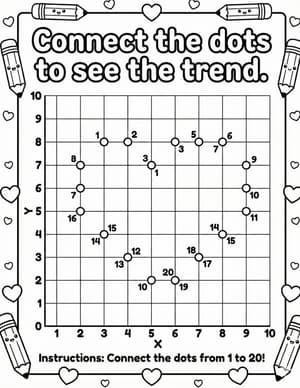
"Connect the dots to see the trend."
A scatter plot that, when connected, forms a simple shape (like a heart).
About this page
At first glance, page 64 looks like a scattering of lonely dots, but a pencil line changes everything. As kids connect dot to dot, a hidden picture emerges, and that little thrill is the same one researchers feel when scattered measurements suddenly reveal a pattern. Data points on their own can seem meaningless, yet together they tell a story. This page sits at the heart of Chapter 5, Counting the Treasure, where the Squad learns that finding the shape inside the scatter is the real treasure hunt. Connecting the dots is both a game and a genuine act of analysis.
The research skill
Plotting points in order is the skill hidden in these twenty numbered dots. Joined from 1 to 20, they form a heart. Joined at random, they make a tangle. Researchers face the same choice when they connect data points on a line graph: the points must follow a sensible order, usually time, or the line tells nonsense. Chapter 5 is about letting the shape of the data appear, and this page makes that concrete. The idea returns in school when children graph a bean plant's height day by day.
Try it at home
Make a number-dot puzzle for someone else to solve. Lightly trace around your child's hand in pencil, then have them place dots along the outline and number them in order around the edge (help with numbers past 10). Erase the traced line so only the dots remain. Swap papers with a sibling or with you and connect the dots in order. Then try joining a copy out of order and compare. Which version shows the hand, and what made the difference?
Talk about it while you color
- Before you connect them, what shape do you think the dots will make?
- Which two dots do you think should be connected first?
- Have you ever found a picture hiding in clouds or stars, and what did you see?