
Curiosity-Driven Science Books for Kids
Compare the four types of science books for curious kids, from fact books to experiment kits to story-led research adventures, and pick the right fit.
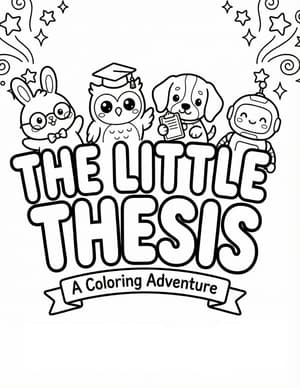
A coloring adventure that teaches children and young adults the research process - from asking big questions to sharing discoveries with the world.
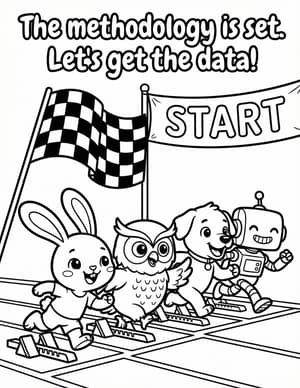
Engage with 100 pages of coloring fun while discovering research concepts through four lovable characters.
Follow the research journey from curiosity to publication across six chapters that mirror real scientific methods.
Complete the adventure and earn your Junior Researcher diploma on page 99, the last page before the back cover.
The Questioner
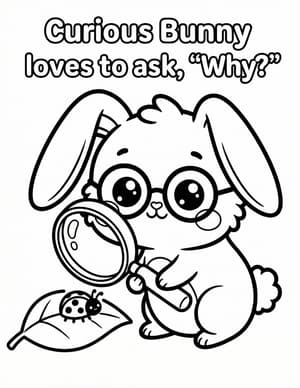
A fluffy bunny with big round glasses and a magnifying glass. Always asking 'Why?'
The Mentor
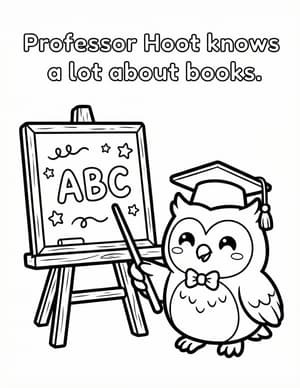
A wise owl in a mortarboard cap. Knows everything about books and guides the squad.

The Organizer
A cute round robot with a heart on its screen. Helps organize big ideas and crunch data.

The Analyst
A beagle with a pencil behind his ear and a clipboard. Loves counting and checking lists.
Observation, asking questions, and the start of a project
Pages 1-10
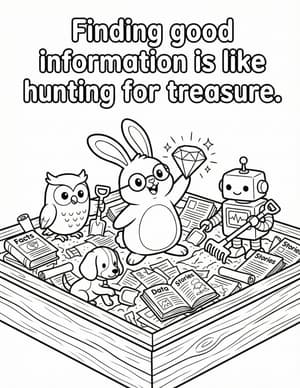
Reading, searching for existing knowledge, and using research tools
Pages 11-25
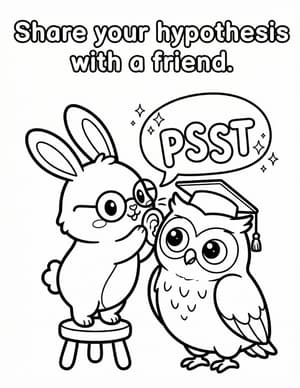
Brainstorming, prediction, and forming a thesis statement
Pages 26-40
Planning the experiment, choosing tools, and research methodology
Pages 41-60
Charts, graphs, pattern recognition, and making sense of findings
Pages 61-80
Writing, editing, peer review, and presenting your research
Pages 81-100
Compare the four types of science books for curious kids, from fact books to experiment kits to story-led research adventures, and pick the right fit.
Take a full tour inside The Little Thesis: 100 pages, six chapters, four characters, and a Junior Researcher diploma, so you know exactly what you are buying.
What makes a science book truly interactive without a screen? How coloring, prompts, and story choices engage kids, and how books compare to apps and kits.
Rated 5 out of 5 stars by 3 Amazon customers
Inspired Imaginative Thoughts
This coloring book was a really great way to interact and ask my daughter questions to inspire creative answers.
Adorable and creative coloring book for little learners
Such a creative and adorable coloring book! The illustrations are cute, engaging, and perfect for young children who love to color. I also love how it introduces the idea of research and completing a thesis in a fun, kid-friendly way. It would make a thoughtful gift for a child with a parent in graduate school, a future little scholar, or any curious young learner. The pages are charming and the concept is so unique!
Read all reviews on Amazon Reviews are quoted with light spelling corrections.
The Little Thesis is inspired by Subthesis.com - a platform for literature review, hypothesis generation, methodology, data analysis, and manuscript writing.
Begin with Page 1