Chapter 2: The Library of Leaves
Bad Source vs. Good Source Coloring Page
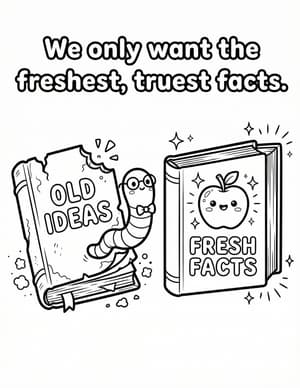
"We only want the freshest, truest facts."
A "Rotten Apple" book (worm coming out) vs. a "Shiny Apple" book (glowing).
About this page
Two books sit side by side, one rotten with a worm wiggling out, one shiny and glowing, and suddenly a big grown-up idea becomes something a four year old can grasp. Not all information is good information. Some facts are fresh and true, and some are wormy. This is a child's first taste of evaluating sources, arguably the most important thinking skill of their generation, delivered through a fruit metaphor they already understand from snack time. It is a standout example of how research coloring books can plant serious skills through simple pictures.
The research skill
Two book covers face off: a crumbling book labeled Old Ideas with a bespectacled worm wriggling out, and a sparkling book labeled Fresh Facts with a smiling apple. The skill is checking whether information is current. Some facts get replaced when people learn more, so researchers look at when a source was made before trusting it. That is part of Chapter 2's job of finding what is known. In school, your child will later look for publication dates and compare older and newer books on the same topic.
Try it at home
Find an old "fact" about your child that has since changed: a pencil mark on a door frame, a baby photo, or last year's shoe. Ask your child to guess whether the old fact is still true. Then measure again with a tape measure or string, or try on the old shoe. Compare the old record with the fresh one side by side. Talk about how the old fact was true when it was written, but a newer check gave a better answer today.
Talk about it while you color
- How can you tell which apple book is the good one just by looking?
- What do you think the worm has been doing inside that rotten book?
- If a friend told you something that sounded silly, how could you check if it was true?